
The original definition of the Imposter Syndrome is from 1978 - but what we understand about psychology, neuroscience and personal and team performance has changed beyond recognition since then. So what is Imposter Syndrome?
Academic research is really important, but it's not always easy to translate it into real-world applications.
That's what Clare Josa has spent the past 2+ decades doing. And her research-backed definitions of Imposter Syndrome have changed the way the world talks about the topic.
Her definitions and research are cited in PhDs and taught on MBAs, worldwide.
So, what is Imposter Syndrome?
Sharing Policy For "What Is Imposter Syndrome?"
Clare Josa is on a mission to free the world from Imposter Syndrome, so she encourages sharing the name and key aspects of her Imposter Syndrome definitions, to help others. Please follow these guidelines:
- Attribution: When sharing, credit "Clare Josa, author of Ditching Imposter Syndrome" and link back to this page, with the clickable text: What Is Imposter Syndrome?
- Restrictions: Content may be used for personal or non-commercial purposes only, unless otherwise agreed and licensed. Sharing in free-to-view public articles, podcasts, videos, and social media posts is permitted, with proper attribution, but not in marketing materials, lead magnets, or paid programmes.
Thank you for wanting to make a positive difference in the world, whilst also respecting Clare Josa's intellectual property rights.
What Is Imposter Syndrome?
Clare Josa's international research studies show that 62% of people experience Imposter Syndrome daily or regularly, to an extent that harms their performance, wellbeing, and mental health. [Source: 2024 Research Study]
But in a world where the internet is full of myths and misunderstandings about Imposter Syndrome, how can you spot those who most need help in your teams?
Let's start with the definitions of Imposter Syndrome.
imposter phenomenon - 1978
"an internal experience of intellectual phoniness"
Clance & Imes
The original 1978 study only included women in academia, which is one of the reasons why the myth has perpetuated for decades that Imposter Syndrome only affects women. Find out here why we realised that's not actually true. Also, their focus on women in academia led to the focus on intellectual phoniness, which is just one arena where Imposter Syndrome can strike.
Clance and Imes originally called this the Imposter Phenomenon.
Over the years, this has morphed into Imposter Syndrome. It's important to note this isn't a clinical, medically diagnosable 'syndrome'. But the common-usage meaning of syndrome with the public does describe it well. And here's a podcast where Clare Josa shares why feels so strongly that instead of arguing about the name, we should be putting energy into solutions.
imposter syndrome - 2019
Imposter Syndrome is the secret fear of others finding out we're not good enough, despite outside-world evidence that we are.
Clare Josa
Clare Josa redefined Imposter Syndrome based on the data from her 2019 research study to help us to better understand the psychology behind what's driving Imposter Syndrome.
And the 'secret sauce' in this definition is the fear of being found out, whether that's as being not good enough, not belonging, or someone having made a mistake in hiring or choosing you for a project.
Academic definitions are important, but often it helps to have a more accessible definition, one that allows people to read and it instantly sense whether it applies to what they're experiencing.
This definition is now cited in PhDs, taught on MBAs, and used in workplaces, worldwide.
imposter syndrome vs self-doubt
Self-doubt and confidence are about what we can and can't do;
Imposter Syndrome is about who we think we are.
Following her 2019 Imposter Research Study, Clare Josa discovered that there's a really important difference between Imposter Syndrome and self-doubt.
Her data also showed why it's so important to know the difference, and how this confusion between Imposter Syndrome and self-doubt can lead people to think it's incurable, because they've been trying to use self-doubt and confidence cognitive tools for Imposter Syndrome, which is an identity-level, nervous system issue.
Clare the difference between Imposter Syndrome and self-doubt here. And here's a podcast episode on this vital definition:
imposter syndrome - 'secret' definition
Imposter Syndrome is the secret fear of others judging us the way we judge ourselves.
Clare Josa
And then there's Clare Josa's 'secret definition' of Imposter Syndrome. This one is the one that gets people nodding when she delivers keynotes, online or in person.
It's the 'ooh, that's me!' definition, for those who have worked so hard to hide the impact of Imposter Syndrome in their lives, even from themselves.
And this definition of what Imposter Syndrome is builds on Clare Josa's Imposter Syndrome Iceberg coaching model, because judging ourselves (rather than just evaluating our performance) captures the identity-level nature of Imposter Syndrome.
And this definition helps people to stop beating themselves up about Imposter Syndrome and to have hope that they can set themselves free from it, once and for all.
The Imposter Syndrome Gap
While we're exploring what Imposter Syndrome is and isn't, it's important to look at the Imposter Syndrome Gap, which is in itself another definition.
Clare covers the Imposter Syndrome Gap in detail here, and it's a really important model to help us understand why Imposter Syndrome can lie dormant for years, and then suddenly pop up, out of the blue, getting someone self-sabotaging or even being one of the 1 in 10 who will consider quitting their job due Imposter Syndrome, today.
It explains why coping strategies aren't enough, and we need to clear the root cause hidden drivers, to truly free ourselves from Imposter Syndrome, which has been the focus of Clare's work for over 20 years.
The Imposter Syndrome Gap is the gap between who we see ourselves as being and who we think we need to be, to achieve a goal or dream.
Clare Josa
Here's a video on what Imposter Syndrome is and isn't:
Here's a video where Clare gives you more insights into her definitions of what Imposter Syndrome is, and also explores why it seems to go away, and then come back to take us by surprise.
Plus: why do we even need to know what Imposter Syndrome is?

what is the opposite of Imposter Syndrome?
It can be useful to define what Imposter Syndrome is by exploring what it isn't.
What is the opposite of Imposter Syndrome?
Hint: it's not arrogance!
You don't need Imposter Syndrome to stay humble.
Find out why in this video from Clare Josa.
Want To Dive In With Solutions?
Here are some of the ways Clare Josa could help you to better understand what Imposter Syndrome is and isn't, and to truly tackle it, starting right now.
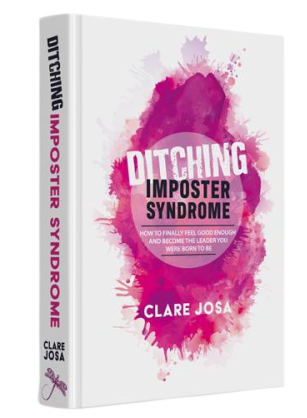
ditching imposter syndrome book
Clare's best-selling 2019 book opens with a section that helps you to spot and clear the Imposter Syndrome myths that keep people stuck, and how to spot the hidden warning signs.
Available in hardback, paperback, Kindle, and audiobook formats.
The imposter syndrome hacks™ app
There's a course in the app all about what Imposter Syndrome is and isn't.
It also has hacks for taming your inner critic, turning it into a genuine cheerleader, and waving goodbye to Imposter Syndrome, once and for all.
coaching imposter syndrome book
Written for managers, leaders, HR professionals, coaches and consultants, Clare Josa's 2025 book - Coaching Imposter Syndrome - guides you through how to spot the Imposter Syndrome warning signs in your team members and give 'first step' support.
Want to share strategies with colleagues & clients?
Clare Josa teaches deep-acting strategies clear Imposter Syndrome in her coach certification programmes, and she covers how to spot the warning signs and early interventions in her keynotes and corporate workshops. Scroll down to find out about working with Clare.
Don't Know Clare Josa Yet?
Clare is considered a global authority in the fields of Imposter Syndrome, burnout and sustainable performance for individuals and teams. She has been an international keynote speaker for over 20 years.
Her research is cited in PhDs and taught on MBAs, worldwide, and she is the creator of the life-changing Safe to THRIVE™ and Natural Resilience Method® frameworks, which she teaches at Facilitator and Master Coach levels, as well as in the world's first Imposter Syndrome App - Imposter Syndrome Hacks™.
The author of ten books, a reformed engineer, and the former Head of Market Research for one of the world's most disruptive brands, she blends science-backed practical inspiration with demystified ancient wisdom, to help you create breakthroughs in ways that are fast, fun and forever.
