
Gone are the days when coaching clients would show up for a session relaxed, curious, and ready to co-create breakthroughs. Nowadays they're much more likely to be squeezing their session in between back-to-back Teams calls, stressed, watching the pings rack up every couple of minutes, and worrying about the impact of ignoring them for your hour together. They're likely to be stuck in hypervigilance.
So let's dive in to some demystified neuroscience that explains why mindset-level work isn't enough for hypervigilant clients, stuck in chronic stress.
Most clients are much more stressed than they were ten years ago, but the coaching industry's toolkit hasn't caught up.
What happens when clients present with chronic stress?
Stress isn't just in your head; it's in your body.
Your body feels every thought you think, so when you think a stress-creating thought, it fires off biochemical reactions that switch on the fight-flight-freeze-fawn stress response. That creates changes in blood flow and hormones in the body, and those changes affect our thoughts and emotions - in what I call the stress cycle.
Chronic stress - long-term, low-grade stress - can get 'locked in'.
Here's what's going on when that happens:
- 1The stress-based thought or external stress trigger fires off the fight-flight-freeze, fawn response. This releases the stress hormones - including cortisol - into the blood stream, using something called the HPA Axis - Hypothalamus-Pituitary-Adrenal. The hypothalamus and pituitary gland are in the brain. The adrenals are grape-sized glands just above the kidneys, and one of their core roles is producing the hormones we need for managing stress.
- 2Normally, once the stress trigger has passed, the HPA axis 'stands down' because the 'threat' has passed, and the body returns to 'homeostasis' - balance: relaxed but alert. The body feels safe. We get on with our day.
- 3But if the mind is telling itself stories about that stress trigger, or going into what-iffing and catastrophising, it fires off that stress cycle again, because the body feels every thought we think, and doesn't care whether the stress trigger is from the outside world, or inside our heads. So the stress cycle continues.
- 4Similarly, if another stress trigger arrives before the previous stress cycle had reset, the body never gets back to baseline - that homeostasis - between triggers. This makes us more sensitive to the next stress or threat trigger - the amygdala (the brain's fear centre) can change to make it more likely to 'sound the alarm' for events that a calm and balanced nervous system would ignore.
- 5Over time, this can leave the nervous system more sensitive to potential threat, constantly scanning for danger and reacting faster to cues that might previously have been ignored, with elevated baseline cortisol levels that make 'relaxation' feel impossible - and unsafe. That heightened state of threat-monitoring is called hypervigilance - where the 'switch' telling the brain and body that the threat is over gets 'stuck'.
- 6This leads to something that McEwen (2017) calls allostatic overload. Allo comes from the Greek for 'change' and stasis comes from the Greek for 'stability' - so it's the ability to stay stable through change. When the body is in allostatic overload, the systems that normally help us adapt to stress have been repeatedly activated, creating cumulative wear and tear and making it harder to return fully to 'neutral' between threats.
This can impair concentration, focus, memory, and cognitive reasoning - all things needed for a great coaching session.
Cortés-Álvarez et al., 2024
I'm curious: have you been seeing chronic stress and hypervigilance in your coaching clients?
The Problem:
The bit of the hypervigilant client's brain that's 'coachable' has gone offline
Mindset-level coaching - or cognitive interventions like CBT - rely on a bit of the brain called the 'prefrontal cortex' - it's behind your forehead. This is the part that is great at logic, reasoning, and being cognitively coached.
But when someone is stuck in chronic stress, or hypervigilance, cortisol down-regulates that part of the brain (Cortés-Álvarez et al., 2024) - reducing its influence - and instead prioritising the survival elements of the nervous system, and hyper-activating threat/fear areas of the brain like the amygdala.
So a coach's attempts to use prefrontal cortex logic and cognitive arguments to help a client to overcome a fear-driven habit will struggle to be heard.
When a client is stuck in chronic stress, the bit of their brain that classic coaching relies on goes offline. The bit that 'mindset' works so well for is overridden by their increased cortisol levels, and the neuroplasticity that cognitive coaching and therapy relies upon is much harder for their brain to access, and cognitive interventions are less likely to work.
Chronic fear and stress have also been found to impair something called 'extinction learning' - the neurobiological process of creating a new ‘safe’ memory to compete with the old fear response, so the brain can learn that the threat is no longer present. This is a vital part of coaching and CBT. This is because that chronic stress suppresses the brain's hippocampus ability to create new neurons, which are needed for the brain to be able to discriminate between fear contexts, and to support the 'extinction learning' that enables the brain to update the meaning of a previously threatening cue (Snyder et al., 2011) (McEwen, 2017).
The hippocampus is the 'pilot' for contextual memory, pattern separation, and flexible learning. When stress halts its ability to grow new neurons, the brain becomes less effective in telling the difference between a past threat and a current safe environment - preventing the 'extinction learning' that coaching and CBT relies upon, and the client stays stuck in the context of the out-of-date fear response.
Everything your hypervigilant client thinks, says, and does in that state will be filtered through the lens of fear, not hope. And the logic and cognitive rational thinking that mindset coaching relies on may not be accessibile to them.
What Might This Look Like In A Coaching Session For Hypervigilant Clients?
resistance
Resistance that might not seem rational from the outside, but it's their nervous system's reasonable response to a perceived threat.
avoidance
Not wanting to answer questions that take them into that 'unsafe zone', even if the context seems objectively low-risk.
freeze
Vagal-dorsal response - shut down - going blank, or unusually compliant, when challenged.
Overthinking
Overthinking every option - as a safety response - and struggling to make decisions.
regression
Enthusiasm in the session, but not following through - or self-sabotaging - once back out in the world.
rinse & repeat
Repeatedly returning to the same issue or pattern of behaviour, despite cognitively 'knowing' what to do differently.
These are often characterised as resistant behaviours to be challenged and pushed on through. But what if they're actually the client's nervous system prioritising safety over change?
Why Pushing On Through The Fear Can Make Things Worse
If a coach reads those signs as resistance, lack of client commitment, or 'faulty thinking' and maladaptive mindset, they might respond by challenging the client, and demanding accountability.
But if the client is already hypervigilant, that can increase the subconsciously perceived threat, making the cognitive tools the coach was trying to use even less accessible for the client, and it risks the coach no longer feeling like a 'safe space' for them.
The client's nervous system decides how much change they get to create, not their thinking mind.
The solution? Safety before shifts.
First Help Their Nervous System Feel Safe, Then Your Coaching Can Work
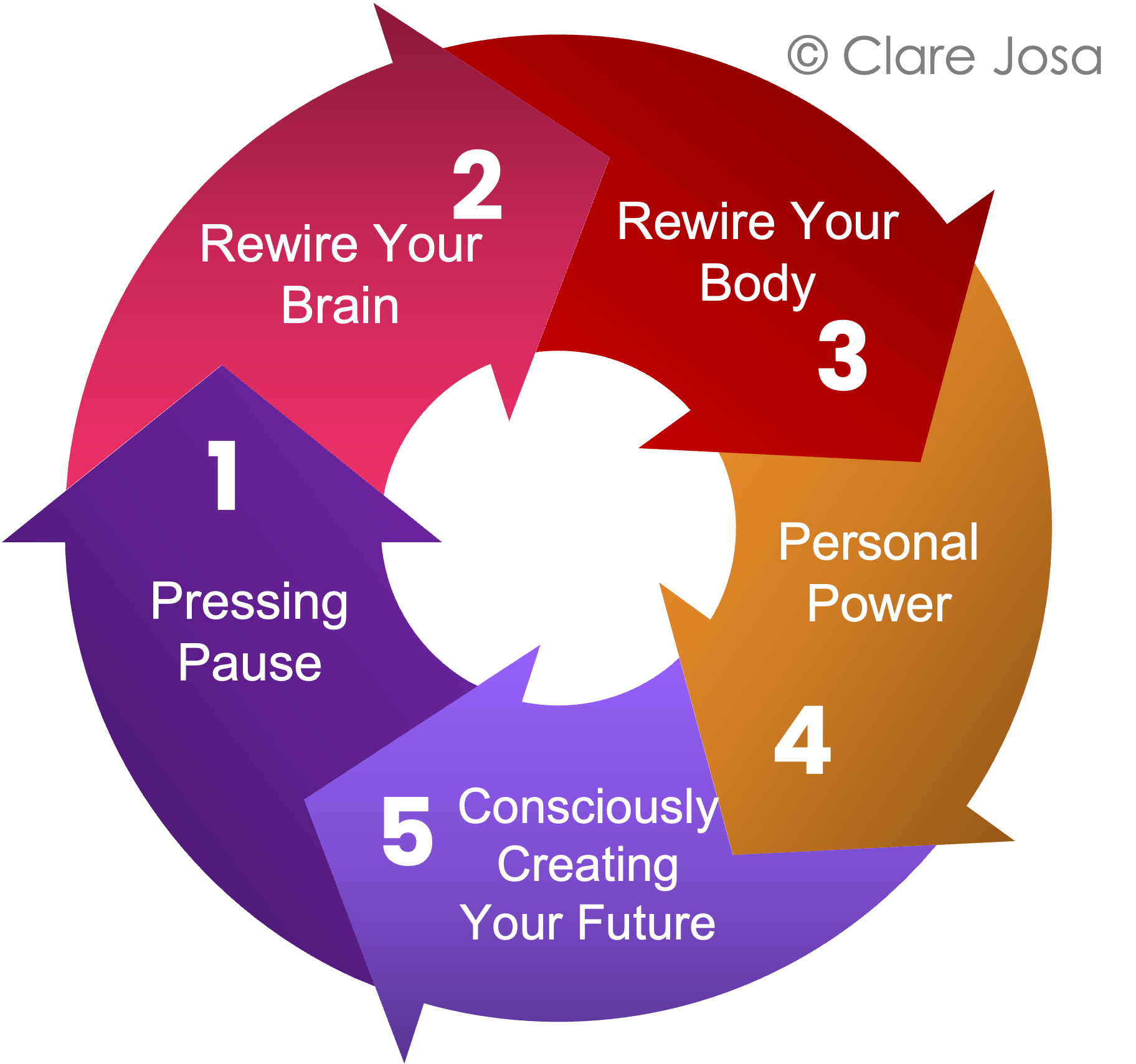
The Natural Resilience Method® was designed to work in that order, rather than asking the client to reframe their thoughts and modify their mindset, while their nervous system's threat radars are still running the show.
You use science-backed, proven strategies to Press Pause - getting the client out of fight-flight-freeze-fawn and hypervigilance.
Then you work with them on Rewiring their Brain and Rewiring their Body - that's the cognitive bit, but also helping them to clear the body's addiction to the cortisol and adrenaline and stress that would otherwise risk derailing the thinking-mind work.
And from that place of grounded, calm confidence, resetting toxic boundaries, Reclaiming their Personal Power, and consciously Creating Their Future become an empowered act, rather than an angry one - it's the deeper identity-level work - allowing the client to become more of who they really are.
Wondering whether your coaching toolkit has kept up with your hypervigilant, chronically-stressed clients' nervous systems?
I've created a personalised assessment, to help you decide whether you've outgrown your current coaching toolkit.
Answer some research-backed questions to get a PDF report, showing you where your strengths lie on five pillars of coaching mastery, plus a personalised action plan with practical next steps you can start to implement today.
It's yours, as my gift to the next stage of your journey.
Already Know You Want to Work More Deeply?
If you're recognising these patterns in your clients and know you want to be able to work more confidently at nervous-system and identity level, without falling into the accidental therapist trap, this is exactly the work you'll discover in the Josa Method® Master Coach programme. It runs once a year, and is only for coaches or therapeutic practitioners with at least four years of client experience, whether in-house for an employer, or as an external coach.
Find out more about the Master Coach course and how to apply here.
